Hardscape
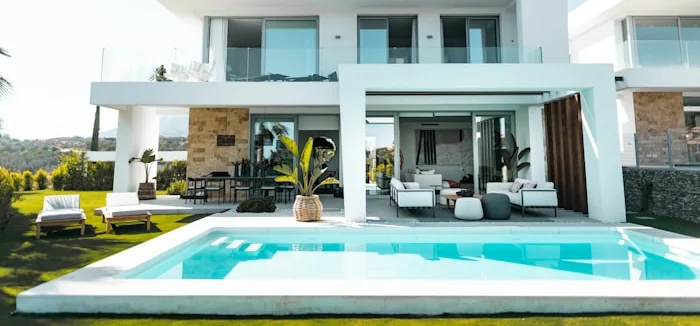
Pool Deck Installation & Remodeling in South Florida
Wet, barefoot, hot and chemically exposed — four demands at once, and they do not all point at the same material.
The one surface where the requirements argue with each other
Every other paved area on a property has a dominant demand. A driveway has to carry loads. A patio has to be the right size. A pool surround has four demands running at once, and satisfying one can work against another.
You want it cooler underfoot, which points toward pale, reflective surfaces. You want traction when it is wet, which points toward texture — and texture holds dirt and is less comfortable to lie on. You want it to shrug off chlorine or salt-system water, which favours dense, low-porosity materials. And you want water moving decisively away from the pool rather than back into it, which is a levels problem before it is a material one.
There is no material that wins all four. What there is, is a sensible order to resolve them in — and an honest account of where a deck contractor's scope stops and a pool contractor's begins.
The brief
Four things a pool deck has to do at once
Bearable in bare feet
Nobody wears shoes on a pool deck. Surface temperature in the afternoon is a genuine selection criterion here in a way it simply is not elsewhere on the property.
Traction when wet
The surface is walked on wet, constantly, by people who are not paying attention. Texture and finish are what change how much grip is retained — with the important caveat in the next section.
Tolerant of pool chemistry
Chlorinated or salt-system water arrives on feet and towels and dries on the deck. The surround gets more chemical exposure than any other paved area you own.
Sheds water outward
Rain and splash-out have to leave the deck away from the pool. A surround that drains back over the coping carries dirt and debris straight into the water.
Demand one
Heat underfoot
Lighter colours reflect more solar energy than dark ones, which is why pale surfaces dominate pool surrounds across South Florida. Material matters too — density, porosity and surface finish all affect how a stone stores and releases heat through the day.
What none of that produces is a surface that stays cool. In direct sun in the middle of a Florida afternoon, every paved material gets hot. Anyone who tells you their product does not is describing a marketing claim, not a physical one. The honest framing is that colour and material make a real, noticeable difference at the margins, and they do not repeal the sun.
Which is why heat is best treated as a design problem rather than purely a material one. The reliable way to make a deck comfortable at two in the afternoon is to put something over part of it. A pergola for filtered cover that keeps the space open, or a tiki hut for denser shade over one zone, does more for afternoon usability than any surface specification.
Where the shade lands is worth checking on site rather than assuming from a plan. The sun's position at the hours you actually use the pool is what decides whether a structure shades the loungers or the fence.
Demand two
Traction when wet
No surface is slip-proof
Not travertine, not textured porcelain, not any coating, not anything anyone will sell you. Materials differ in how much traction they retain when wet — that is a real and useful difference, and it is not the same as being safe. A contractor promising a slip-proof deck is telling you something that is not true about a subject where being wrong has consequences.
What actually changes traction
Surface texture. The dominant factor. A honed, brushed, tumbled or textured finish holds more grip wet than a polished or highly smooth one. This is why the same stone in two finishes behaves quite differently around water.
Where the wet routes are. Traction matters most where people are certain to be wet and moving: the steps out of the pool, the path to the door, the route to the towels. Those specific runs deserve more attention than the deck as a whole, and sometimes a different finish.
Slope. A surface that has to drain has to fall, and any fall reduces grip slightly. Balancing enough slope to move water against not making the wet routes steeper than they need to be is part of the levels design.
What is on it. Algae in a shaded damp corner, sunscreen residue, and a build-up of fine dirt all reduce traction on any material. Cleaning is a traction measure, not just a cosmetic one.
Material selection is one input among several. How the deck is laid out, where the wet routes fall, how it is maintained, and supervision around water all matter alongside it.
Demand three
Materials, judged for a wet barefoot surface
The same materials appear on patios, but the criteria that decide between them change completely once the surface is around water.
| Material | Why it comes up | What to weigh against it |
|---|---|---|
| Travertine | A pale natural stone, commonly chosen for how it behaves underfoot, with a texture that retains reasonable traction wet. | Porous, so it responds differently to staining and to pool chemistry than a dense material. Natural variation between pieces is inherent, not a defect. |
| Porcelain | Dense and low-porosity, so it absorbs very little and is highly consistent in colour. Available in textured finishes intended for wet areas. | Installation detail is less forgiving, cutting needs the right equipment, and the finish has to be specified for wet use rather than assumed. |
| Concrete pavers | The widest range of formats, colours and finishes, and individual units can be lifted and replaced later. | Colour is manufactured rather than natural, so batching matters across a large surround. New units may show efflorescence. |
| Shell stone / coral stone | A pale, naturally textured limestone with a strong regional character, long used around pools in this part of Florida. | Soft and porous compared with porcelain, so it wants more care over staining and sealing decisions. |
Demand four
Getting water away from the pool
The one demand that is entirely a levels problem, entirely decided before anything is laid, and entirely expensive to fix afterwards.
Outward, not inward
Deck surfaces fall away from the water. A surround that drains toward the pool carries dirt, sunscreen residue and debris over the coping every time it rains, and gives the filtration something to do that it should not have to.
Splash-out is constant
The zone immediately around the coping is wet far more of the time than the rest of the deck. It is worth treating as its own condition rather than as the edge of a bigger surface.
Where a fall alone is not enough
A deck enclosed by the house on one side and rising ground on another may have nowhere for surface water to run to. That is where a drainage channel or run earns its place — decided at design stage, because retrofitting drainage into a finished deck means taking the deck up.
The edge where it meets everything else
Deck to lawn, deck to turf, deck to patio: each junction needs both sides to agree on a finished level. Planned separately, the junction is where water collects.
Being clear
Coping, the waterline, and where our scope ends
We build decks. We are not pool contractors.
The pool shell, the interior finish, waterline tile, plumbing, equipment and any structural work on the pool belong to a licensed pool contractor, and that is where they should stay. It is a different trade with different licensing, and pretending otherwise would not serve you.
What Arco does is the deck surface around the pool, and the coordination at the line where the two meet.
Why the coping line matters to a deck job
Coping is the edge treatment where the deck meets the water. It sets the finished level the entire surround has to work to, it is the detail most visible from in the water, and it is where a deck job and a pool job physically touch.
On a project where both are happening, the sequence matters: the pool's finished levels govern the deck's, not the other way round. We work to the pool contractor's programme rather than around it. On a deck-only job where the pool and its coping are staying, the existing coping level becomes a fixed constraint that everything else is set out from.
Say who else is involved, early
If a pool contractor is already engaged, or a resurfacing is planned, that is worth raising at the first conversation. Two trades working to one levels plan is straightforward. Two trades discovering each other on site is not.
Scope, plainly
Ours: the deck surface, its base and drainage, the setting out, edge restraint, and the junctions where the deck meets a patio, turf, lawn or boundary.
Not ours: the pool shell, interior finish, waterline tile, plumbing, pumps, heaters, lighting within the pool, and any structural pool work — all of which are a licensed pool contractor's.
Shared: the coping line and the finished levels around it, which have to be agreed between both trades before either builds to them.
How it runs
Remodeling a deck that is already there
Most pool deck work is remodeling rather than new build, and it starts with one question that changes everything downstream.
Overlay, or take it out?
An overlay — laying a new surface over the existing slab — is viable where that slab is sound, stable and not moving, and where the added height still works at the coping, the door thresholds and any steps. It is less disruptive and keeps the existing base in service.
Removal and rebuild is the answer where the existing deck is cracked because the ground beneath it has moved, where levels or drainage were wrong from the start, or where the extra height an overlay adds cannot be absorbed at the coping and the doors. Overlaying a slab that is already moving inherits the movement, and the new surface eventually shows it.
Which case you are in is established on site, before anything is proposed. It is the single biggest variable in a pool deck remodel.
-
Assess the existing deck
Condition of the slab or paving, how it is failing, where water currently goes, the coping level, and how much height an overlay could absorb at the thresholds. Overlay is ruled in or out here.
-
Levels and drainage plan
Finished heights set from the coping outward, falls set to move water away from the pool, and any drainage run positioned. Junctions with patio, turf or lawn resolved on the same plan.
-
Material and finish
Chosen against the four demands, with the finish specified for wet use rather than assumed. Wet routes — pool steps, the path to the door — considered specifically.
-
Removal or preparation
Either breaking out the old surface and rebuilding the base, or preparing the existing slab for an overlay. Protection of the pool itself during the work is agreed before anything starts.
-
Lay, restrain, joint
Setting out worked from the coping line so full units face the water, then laying, edge restraint, cuts at the perimeter, and jointing.
-
Clean down and walkthrough
Site washed down and cleared, then a walkthrough of the finished surround including how to look after that specific material next to pool water.
Around the deck
Turf, patio and shade around the surround
Where the deck becomes a patio
A pool surround that runs into a dining or lounge area is one surface doing two jobs. Whether it changes material at that point or continues is a design decision — but the levels have to be continuous either way. Patios covers the sizing side.
Turf up to the deck edge
Artificial turf is often chosen for the strips around a surround that never thrive as lawn. Its base and the deck's have to meet at a shared finished level, so it is planned with the deck rather than after it.
Shade over one zone
A pergola or tiki hut does more for afternoon usability than any surface choice. Its footings sit in the deck, so its position belongs in the setting out rather than being added later.
The boundary behind it
A fence line is the backdrop to everything around the pool and the thing that decides how private the space feels. Height and line are worth settling while the layout is still on paper.
Afterwards
Looking after a surround
More demanding than a patio, for one reason: everything that comes out of the pool ends up on it.
Rinse the splash zone
Pool water carried out on feet and towels dries on the deck and leaves what was dissolved in it behind. Fresh water over the zone nearest the coping is the simplest thing that helps.
Joints near the water
The joints closest to the coping see the most water and want checking more often than those further out. Keeping them full is what keeps the field interlocked.
Cleaning is a traction measure
Algae in a shaded corner, sunscreen residue and fine dirt all reduce grip on any material. Cleaning the wet routes is not purely cosmetic.
Sealing, on porous stone
Optional, and more often discussed here than elsewhere because porous materials sit next to chemically treated water. It changes appearance and needs reapplying. Worth a conversation, not an automatic yes.
Why Arco
We will tell you what a surface cannot do
No slip-proof claims
Because there is no such thing. You get an honest account of how finishes differ in wet traction, and where that sits among the other things that matter around water.
A scope you can see
The deck is ours; the pool is a licensed pool contractor's. That line is stated up front rather than blurred, and where both trades are working, we build to their levels.
Licensed contractor
Florida Certified Building Contractor licence CBC1269393, printed in the footer of every page here so you can verify it independently.
Areas we serve
Pool deck work across South Florida
Common questions
Pool deck questions we are asked most
Which pool deck material is slip-proof?
None of them. No surface is slip-proof, and a contractor who tells you otherwise is selling rather than advising. What materials differ in is how much traction they retain when wet, which comes largely from surface texture and finish. A textured or honed finish holds more than a polished one. Traction is one factor among several, alongside how people move around the deck, where the wet routes fall and supervision around water.
Do you work on the pool itself?
No. The pool shell, the interior finish, waterline tile, plumbing, equipment and any structural work on the pool are a licensed pool contractor's scope, and that is where they should stay. Arco builds the deck surface around the pool and coordinates at the coping line. On a project where both are happening, we work to the pool contractor's programme rather than around it, because the pool's finished levels govern ours.
Can an existing pool deck be resurfaced instead of replaced?
Sometimes. An overlay onto an existing slab is viable where that slab is sound, stable and not moving, and where the added height still works at the coping, the door thresholds and any steps. Where the existing deck is cracked because the ground beneath it has moved, an overlay inherits the movement and the new surface will eventually show it. Which case you are in is assessed on site.
Why does travertine come up so often around pools?
Because it is a pale natural stone that is commonly chosen for how it behaves underfoot, and its texture holds reasonable traction when wet. That said, no paved surface stays cool in direct South Florida sun through the afternoon. Travertine is also porous, which changes how it responds to staining and to pool chemistry compared with a dense porcelain. It is a strong option, not an automatic answer.
Where does the water from the deck go?
Away from the pool, not into it. Deck surfaces are graded so rain and splash-out run outward to somewhere that can receive them, rather than carrying dirt and debris back over the coping. Where a deck is enclosed by the house on one side and raised ground on another, that may mean a drainage channel or run rather than surface fall alone. It is worked out at design stage, because retrofitting drainage into a finished deck is expensive.
How does pool water affect the deck surface?
Chlorinated and salt-system water carried out on feet and towels reaches the deck constantly, and it dries there. Over time that means the surround gets more chemical exposure than any other paved area on the property. Rinsing splash zones with fresh water helps, joints near the water want checking more often than joints further out, and material choice is worth making with this in mind rather than discovering it afterwards.
Overlay or rebuild? That is the first answer you need
It changes the scope, the sequence and the cost of a pool deck remodel — and it can only be settled on site. Book a free visit and we will establish it before anything is proposed.